
Clearing Land After Logging in Suffolk, VA
Timber is a big part of Suffolk land, and plenty of parcels change hands right after a harvest: stumps, tops, limbs, skid trails, and a flush of sweetgum and pine coming back. What happens next depends on what you want the land to be. Replanting it, turning it into a field or pasture, or building on it each takes a different kind of clearing, and Virginia's timber rules treat each one differently. Here's how to think it through.
What a logged tract looks like
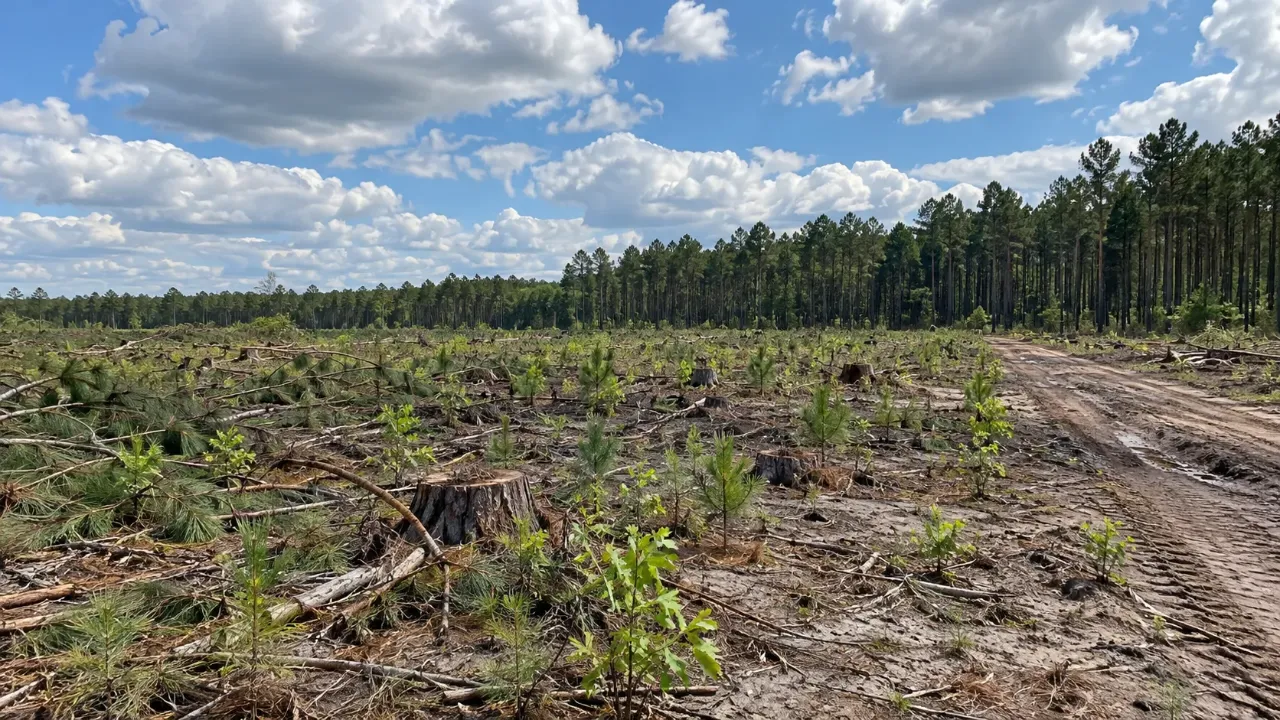
After a commercial harvest, the merchantable logs are gone and almost everything else is still there: stumps at the height the saw left them, tops and limbs (slash) scattered or piled at the landings, ruts from skidders, and the small trees the loggers didn't want. Within a season, hardwoods like sweetgum and red maple sprout back from stumps and roots, and pine seedlings fill in. The U.S. Forest Service's species guides describe sweetgum regenerating from root sprouts and red maple sprouting within weeks of being cut. Leave a cutover alone for a few years and it becomes a dense thicket that's harder and costlier to clear than the original slash.
Suffolk has a lot of land in this cycle. The city's comprehensive plan says agriculture and forestry make up "over one-third of the total land area of the City."
Decide what the land is for
- Grow timber again. The cheapest path. Site preparation and replanting is forestry work, and the Virginia Department of Forestry and consulting foresters handle it. The land stays in forestry, with forestry's exemptions.
- A field, pasture, food plots, or hunting land. Mulch the slash and regrowth, then deal with stumps where you'll plow or mow. Clearing for bona fide agricultural or improved pasture use is exempt from the city's land disturbance permit.
- A house site or lots for sale. Now it's development. The stumps and roots have to come out of the building area, the ground gets graded, and the city's land disturbance rules apply at 2,500 square feet inside the Chesapeake Bay Preservation Area or 10,000 outside it. Clearing a house site covers that path.
How cutover gets cleared
- Forestry mulching. A mulcher grinds the slash, small leftover trees, and young regrowth in place and cuts stumps low. One pass, nothing to burn, roots left holding the soil. It's the usual choice for turning cutover into usable ground for fields, trails, or a view, and the only practical one from May through September, when Suffolk bans burning.
- Raking and piling. A dozer or excavator with a root rake pushes slash and stumps into windrows or piles. Faster on heavy debris, but it disturbs the soil and leaves piles to deal with.
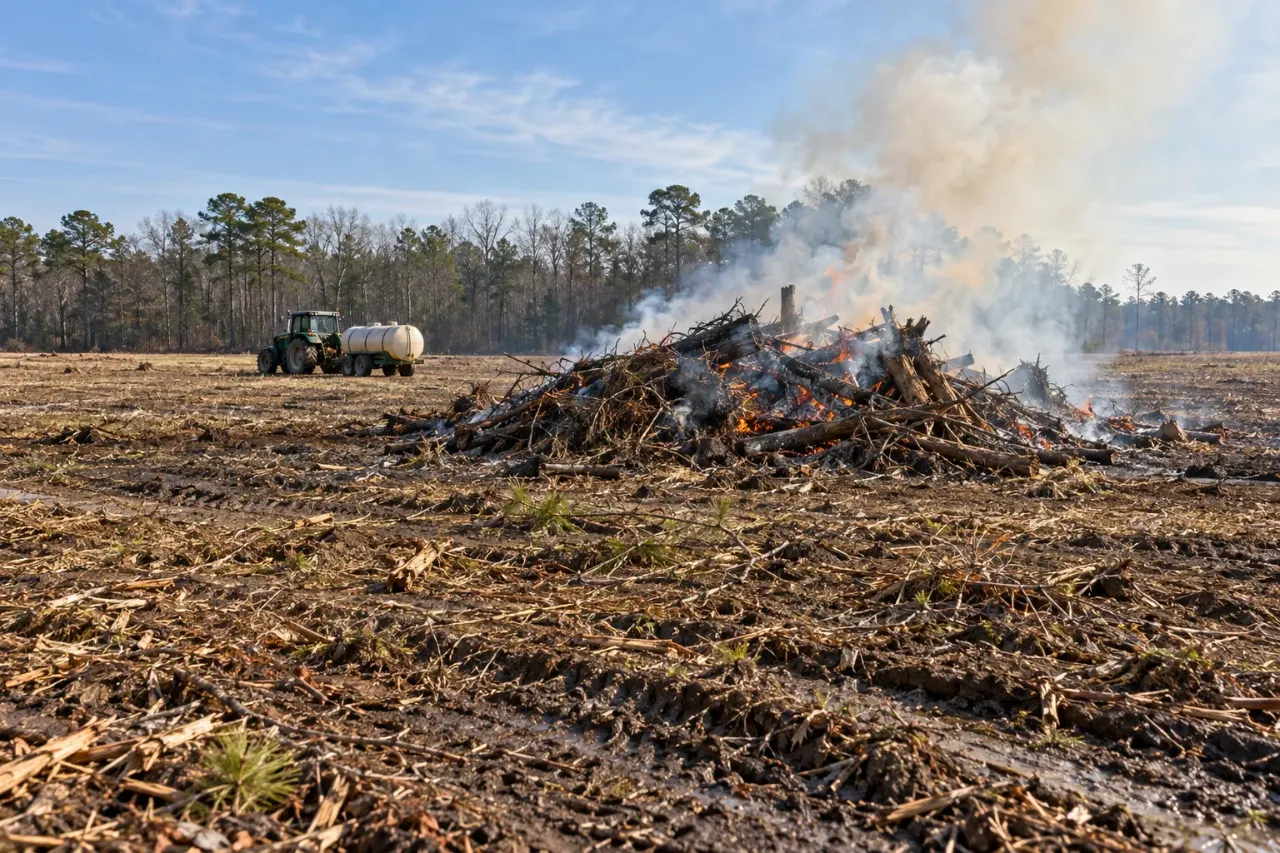
- Burning the piles. Only October through April in Suffolk, with a Fire Marshal permit, at least 500 feet from occupied buildings unless the occupants agree, and only brush, stumps, and similar debris. From February 15 to April 30, the 4 PM law adds hours. The burning calendar has details.
- Stump removal and grading, only where something will be built or the ground needs to be smooth for equipment.
The timber rules that come along with the land
The harvest exemption has a condition. Suffolk's erosion and stormwater ordinance exempts harvesting forest crops only if the land "is reforested artificially or naturally" or converted to bona fide agricultural or improved pasture use (City Code § 35-6). A harvest that turns out to be the first step of a subdivision or a house site isn't covered.
The seed tree law. When loblolly or white pine is cut commercially from ten acres or more where those pines make up a quarter or more of the live trees, Virginia's seed tree law requires leaving at least eight healthy, cone-bearing pines 14 inches or larger on each acre, or two smaller pines for each missing one. The exemptions include land with 400 or more pine seedlings four feet tall per acre; clearing for bona fide agriculture or improved pasture, with evidence like the land cleared of debris, or fenced and seeded, within twelve months after the harvest; subdividing for building sites, with homes under construction or finished within two years; land zoned for a more intensive use than agriculture or forestry; and a plan approved by the State Forester before cutting.
The logger notifies the state. Under Va. Code § 10.1-1181.2, the operator of a commercial harvest must notify the Department of Forestry within three working days of starting. That's the logger's job, not yours.
Near water, the buffer comes back. Inside Suffolk's Chesapeake Bay Preservation Area, forestry is exempt from the Bay Act rules if it follows the Department of Forestry's water quality practices. But the ordinance says that when farming or forestry stops in the 100-foot buffer and the land is converted to another use, "the full 100-foot wide buffer area shall be reestablished." So a cutover along a creek that you plan to build on comes with a replanted buffer. More on the buffer.
Cost and timing
Cutover is usually priced like forestry mulching: by the acre, the day, or the machine hour, depending on how heavy the slash is and how much regrowth has come in. Fresh cutover is the cheapest it'll ever be to clear; every year of regrowth adds machine time. Wet ground slows the work, and some Suffolk tracts can only be worked in the drier months. The cost guide lists published rates for reference.
Cutover questions
I just bought a logged tract. Should I clear it now or wait?
If you're going to use it for anything but timber, sooner is cheaper. Sprouts and seedlings grow fast, and a two-year-old cutover is a much bigger mulching job than a fresh one.
Can the loggers just push everything into piles?
Some will, as part of the harvest contract. Get it in writing. Then the piles have to be burned in season with a permit, ground, or left to rot.
Do I have to leave seed trees?
Only when the seed tree law applies (commercial pine harvests of ten acres or more with enough loblolly or white pine) and none of its exemptions do. The Department of Forestry can tell you which applies before the harvest.
Can I build where the timber was cut?
Yes, through the normal process: septic evaluation, the city's land disturbance permit, and stumps grubbed from the footprint. Plan the house outside any RPA buffer.
How we help
Call or send a short request with the acreage, when it was logged, and what you want it to be. We connect you with one independent contractor who clears cutover in your part of Suffolk. They walk it and give you a quote, and you decide. There's no charge for the referral.
Want a local contractor to walk your land?
Call or send a short request. There's no charge for the referral.