
Clearing a Waterfront or Creek Lot in Suffolk, VA
Suffolk has about 150 miles of shoreline along the Nansemond and James Rivers, by the city's count, plus countless creeks and marsh edges, and a lot of owners want the same thing: a clear view of the water and a path down to it. In Suffolk that means working inside the Chesapeake Bay Act's 100-foot buffer, where cutting trees, shrubs, or even groundcover needs city approval and replanting. Here's what you can do, what you can't, and how to go about it without a stop-work order.
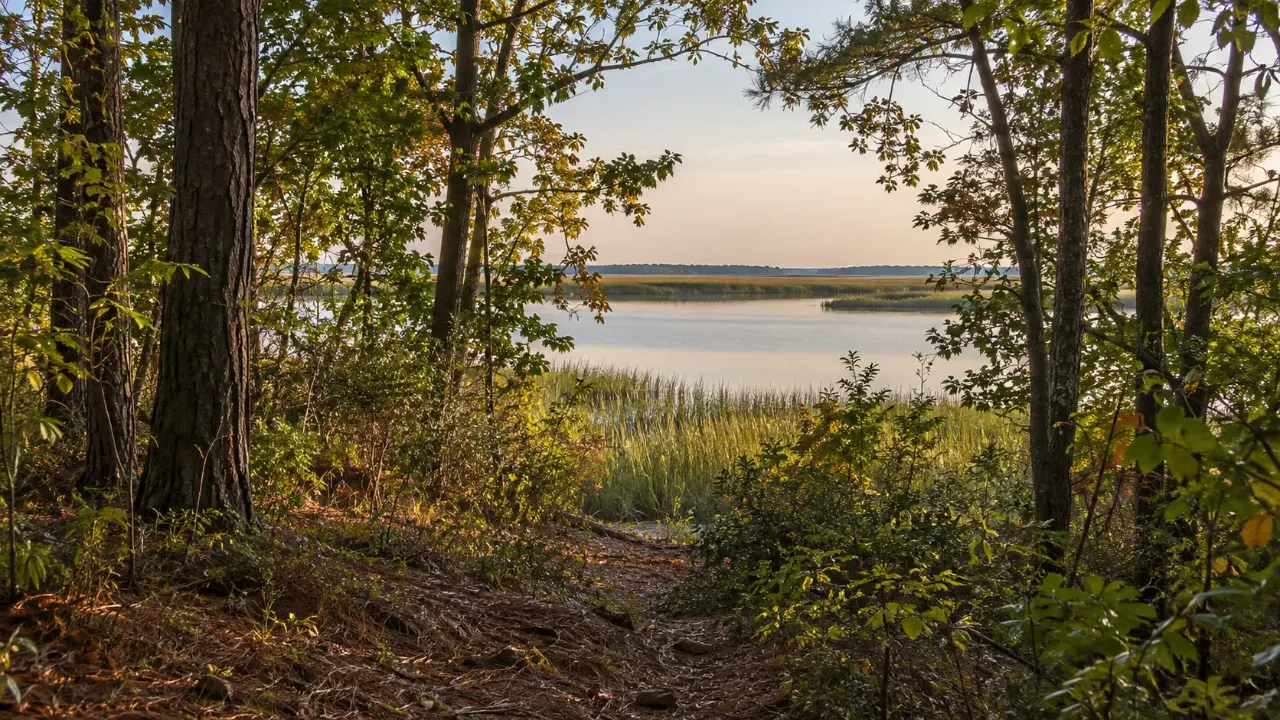
Where the buffer is
Suffolk's Resource Protection Area (RPA) includes tidal wetlands, tidal shores, non-tidal wetlands connected to them or to streams that flow year-round, and a vegetated buffer "not less than 100 feet in width" landward of those, and along both sides of any water body with perennial flow (UDO § 31-415). So the 100 feet is measured from the edge of the marsh or wetland, not from the open water, and on a lot with a wide fringe of marsh the buffer can reach well up the yard. The city's maps are general; exact lines are drawn for each site, and for a single-family house the Planning Director can do that instead of requiring an environmental study.
The buffer has a job: the city's ordinance says a 100-foot buffer is deemed to achieve a 75 percent reduction in sediment and a 40 percent reduction in nutrients from runoff. That's why the rules focus on keeping it vegetated rather than on how big your project is. The 2,500 square foot permit line doesn't apply here; the buffer rules reach any removal of vegetation.
What you can do in the buffer, with approval
The city's guidance on removing vegetation in the RPA starts with one rule: "Removal of trees, shrubs, or groundcover within the RPA buffer is only allowed if approved by the City of Suffolk Planning Division." With that approval, the ordinance and the state regulation (9VAC25-830-140) allow:
- Sight lines and vistas. Trees "may be pruned or removed as necessary to provide for sight lines and vistas," with removed trees replaced by other vegetation that's equally effective. The city's page says "reasonable" sight lines, and pruning comes before removal.
- An access path to the water.
- Dead, diseased, or dying trees and shrubs, and noxious weeds such as Johnson grass, kudzu, and multiflora rose.
- Thinning, as the city permits, and general woodlot management.
Everything you remove has to be replaced. The city says removed vegetation "must be replaced with other vegetation that is equally effective in preventing erosion and removing pollutants," and that "even when removing invasive species, the RPA buffer must be replanted" according to the state's riparian buffer manual. The city also suggests clearing invasive plants first when opening a view, since that often frees up the sight line without cutting native trees.
What you can't do
- Clear the buffer to make lawn. The buffer has to be retained where it exists and established where it doesn't.
- Build in it. New development goes outside the 100-foot buffer, and sheds, garages, pools, and patios must be outside it as well. Lots recorded before October 1, 1989 can ask for a minimal encroachment for the house, but never into the seaward 50 feet.
- Grade or grub without review. Land disturbance in the RPA requires a Water Quality Impact Assessment, and work within 50 feet of the wetland or shore takes the more detailed version.
- Treat "mulching" as a loophole. A forestry mulcher is gentle on the soil, but removing vegetation in the buffer needs approval no matter what machine does it.
Marsh and shoreline: the Wetlands Board
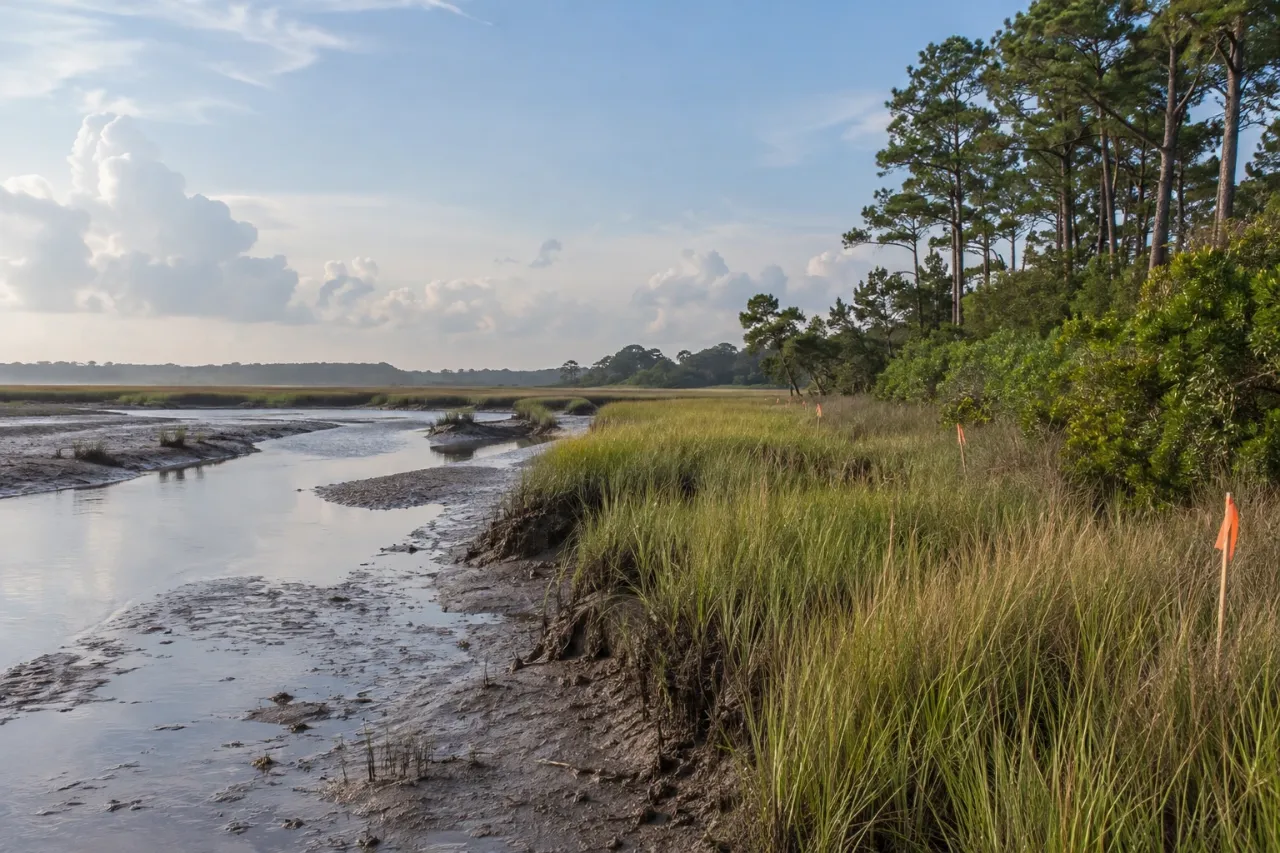
The marsh itself is a separate jurisdiction. Tidal wetlands, like the salt marshes along the Nansemond River, are regulated by the Suffolk Wetlands Board, and the city code lists bald cypress, black gum, tupelo, and wax myrtle among the plants that mark vegetated tidal wetland. Cutting, filling, or building in the marsh, including bulkheads, riprap, and living shorelines, starts with a Joint Permit Application filed through the Army Corps of Engineers' online Regulatory Request System, and projects that need a Wetlands Board hearing carry a fee of about $250 to $262.50 (the city's permitting page and Wetlands Board review page list different amounts, so confirm with Planning). Approved shoreline erosion projects can remove trees and woody vegetation as part of the work. The city is clear that it's the landowner's responsibility to get every permit needed.
How to go about it
- Call Planning first (757-514-4060). Ask where the buffer line falls on your lot and what they'll need to see. The city says to call if you're unsure whether vegetation is in the buffer.
- Mark what you want gone and why. Specific trees for a sight line, a path route, dead or invasive plants. A vague "clear to the water" won't fly.
- Plan the replanting at the same time. Native shrubs and understory trees that hold the bank are what the replacement rule is after.
- Get approval in writing, then hire the work. A contractor who works waterfront lots in Suffolk should be familiar with the process.
- Keep machines light and off the bank. Pruning and selective removal near the water is often hand and climber work, not a mulcher.
Outside the buffer, the rest of the lot follows the normal rules: the 2,500 square foot land disturbance line inside the Preservation Area, silt fence between the work and any wetland, and stabilizing bare ground quickly. Clearing a house site covers that part.
Waterfront questions
Can I cut the trees between my house and the river?
If they're in the 100-foot buffer, only with Planning approval, and only as much as a reasonable sight line needs, with replacement planting. Pruning and limbing up often gets you most of the view.
Can I remove the vines and invasive shrubs?
Noxious weeds like kudzu and multiflora rose can come out, but the city still asks you to get approval and replant the buffer afterward with suitable vegetation.
A tree in the buffer is dead and leaning toward the house. Can it come down?
Dead, diseased, or dying trees are on the allowed list. Call Planning, and expect to replant something in its place.
Does the buffer apply to a ditch?
The RPA buffer follows tidal water, connected wetlands, and water bodies with perennial flow. Many farm and roadside ditches only run after rain. Whether a given ditch or creek counts is a site-specific call; Planning makes it.
I'm in southern Suffolk. Does any of this apply?
The Bay Act rules apply only within the Chesapeake Bay watershed, and the city says southern Suffolk is outside the Preservation Area. Wetlands are still regulated everywhere, and the city's separate stream buffer for development applies along mapped streams. Confirm with Planning.
How we help
Call or send a short request and tell us the lot is on the water. We connect you with one independent contractor who does selective work in your part of Suffolk. They walk it with you and give you a quote, and you decide. There's no charge for the referral.
Want a local contractor to walk your land?
Call or send a short request. There's no charge for the referral.