
Clearing Wet or Low Ground in Suffolk, VA
A lot of Suffolk land is flat and wet for part of the year, and that shapes every clearing job: when it can be done, which machines can do it, what it costs, and whether the wet spot is just soggy or is a regulated wetland. Here's what the soil survey says about Suffolk ground, how contractors work wet sites, and how to tell when you need a wetland call before anyone clears.
What Suffolk ground is like
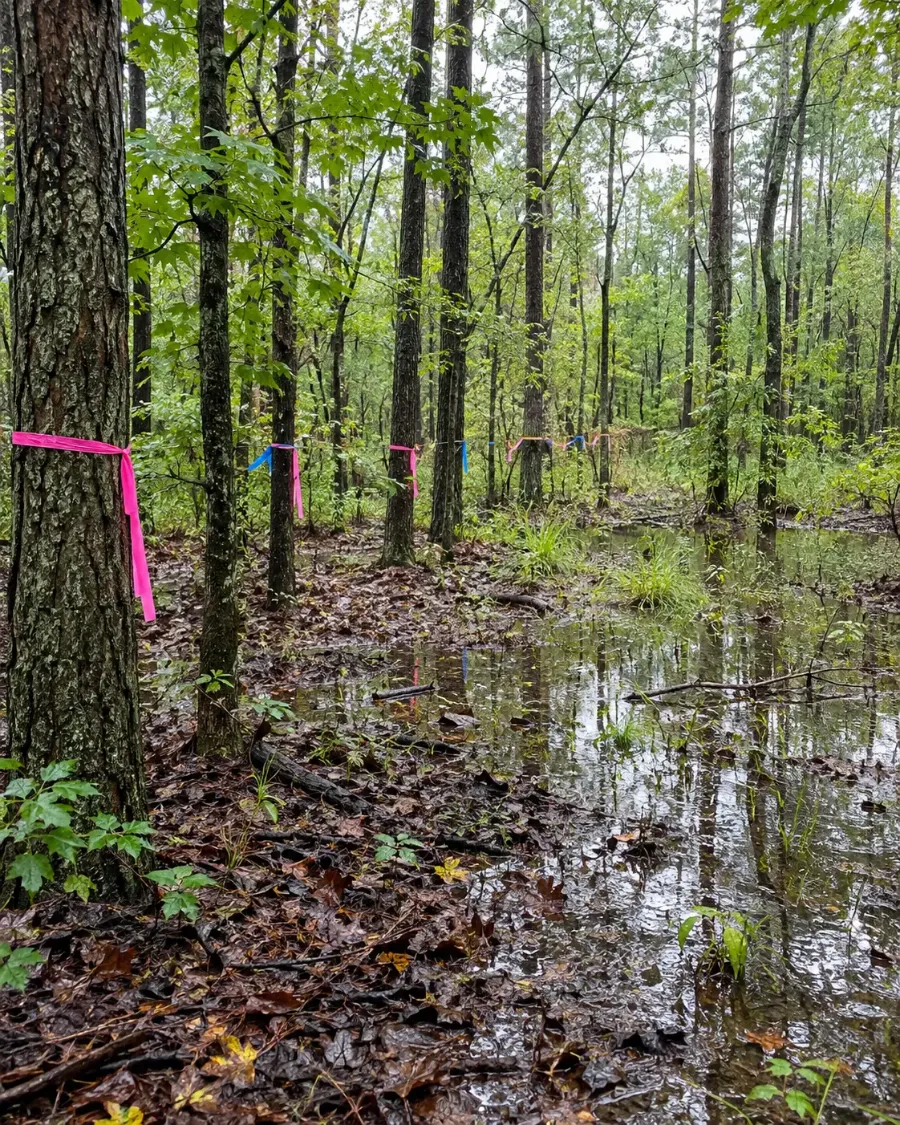
By our tally of the USDA's soil survey data for the City of Suffolk, about half the city is mapped as somewhat poorly to very poorly drained, nearly three-quarters of it sits on slopes under 2 percent, and the water table reaches within about a foot of the surface at some point in the year on more than a third of it. The city's comprehensive plan counts roughly 95,000 acres of wetlands, from tidal marsh to "broad flat swamps such as the Great Dismal Swamp."
A few of the common soils show what that means on the ground. The Rains series, the most widespread single map unit, is poorly drained with a seasonal high water table 0 to 12 inches down from December through April. Eunola, the most extensive series, drains better but still carries a seasonal water table 18 to 30 inches down for four to six months of the year. Pungo and Belhaven mucks, which together cover more than 25,000 acres, are organic soils that make soft footing for heavy equipment when they're wet. Other parts of the city, like the Kenansville sands, drain well and are mostly in crops. Your land could be either, or both.
You can look up your own parcel on the USDA's free Web Soil Survey: draw your property, and it lists the soil types and their drainage class.
How contractors work wet ground
- Timing. On soils whose water table is high from winter into spring, late summer and fall are usually the driest windows. That runs straight into Suffolk's May-through-September burn ban, so wet-season and dry-season plans tend to look different: mulch or haul in summer, burn only in the October-to-April window with a permit.
- Tracks, not tires. Tracked machines spread their weight; wheeled equipment sinks and ruts. Ask what the contractor will bring and what its ground pressure is.
- Mulching first. A forestry mulcher leaves roots in place and lays a mulch mat that helps carry the machine. Grubbing stumps out of saturated ground churns it into mud.
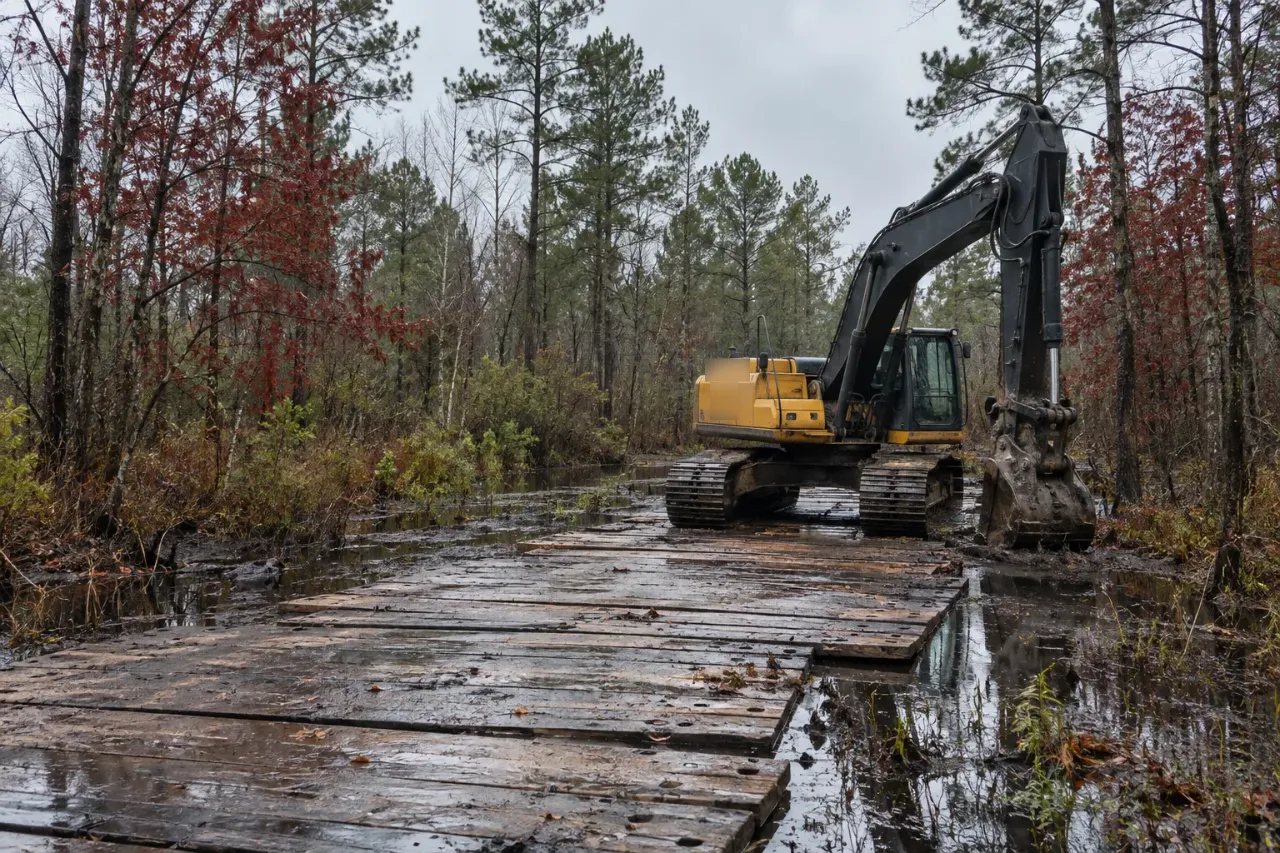
- Mats. Timber or composite mats laid over the softest stretch let heavy equipment cross without sinking. They add cost, but less than a stuck machine or a rutted lot.
- Knowing when to stop. A good operator stops when the ground stops holding. If a quote promises a date regardless of weather on a wet site, ask what happens when it rains.
Soggy, or a wetland?
This is the question to settle before any clearing on low ground, because the answer changes who has to approve the work. The USDA soil data mark a large share of Suffolk as hydric, meaning soils that formed under saturated conditions. But a hydric soil isn't automatically a regulated wetland; that depends on the plants and how long the ground stays wet, and the call belongs to the regulators, not to us or your contractor.
- Tidal marsh is the Suffolk Wetlands Board's jurisdiction, through the joint permit application.
- Non-tidal wetlands are regulated by the U.S. Army Corps of Engineers and Virginia DEQ. Mechanized clearing, filling, or ditching in a wetland generally needs their permits regardless of acreage. The Corps can make a determination of where the regulated wetland line is on your property.
- Non-tidal wetlands connected to tidal wetlands or to a stream that flows year-round are also part of Suffolk's Resource Protection Area, with the 100-foot buffer around them. More on the buffer.
- Farming and forestry have their own allowances under these rules, but converting a wet woodlot to a house site doesn't fall under them.
If the land has standing water much of the year, cattails or rushes, or trees with water marks and shallow roots, assume it may be wetland and ask before clearing.
Wet ground and septic
Wet soil is often the deciding factor for a house site, because the drainfield needs ground that can absorb water. NRCS's own interpretation rates Suffolk's soils as very limited for conventional septic absorption fields across the board, but that's a broad soil-map rating; the actual permit decision comes from a site evaluation for the Virginia Department of Health's Western Tidewater Health District (Suffolk office, 757-514-4700). Alternative systems exist for difficult soils. Get the evaluation done before you clear, keep machines off the area it approves, and inside the Bay Preservation Area remember the city requires a reserve drainfield area as large as the primary one.
Ditches and drainage
Flat land in Suffolk drains through ditches, and clearing jobs often include cleaning out an old field ditch or a ditch along the front of a lot. Clearing brush off a ditch bank is routine. Digging a new ditch, deepening one, or draining a wet area is different: in a wetland, that's the kind of work the Army Corps and DEQ regulate, and anything that changes how water leaves your lot can affect the neighbors and the road ditch. Raise drainage with the contractor at the quote stage, and for a new driveway entrance or culvert at the road, ask the city about any permit before the work.
What wet ground does to the price
- Slower machine work and weather days, especially on day-rate jobs.
- Mats, stone for a construction entrance, and extra silt fence.
- Debris that can't be burned in season and has to be mulched or hauled.
- Repairing ruts and regrading if work pushed ahead in the wet.
- Wetland delineation or permit costs, if the site needs them.
The cost guide lists published rates for reference.
Wet ground questions
When is the best time to clear a wet lot in Suffolk?
Usually late summer into fall, after the water table drops and before winter rain brings it back. Your contractor will judge by the ground, not the calendar.
Can a mulcher work on soft ground?
Often, better than other machines, since it's tracked and leaves a mulch mat behind it. But there's a point where any machine sinks, and organic muck soils get there sooner than sandy ones.
Will clearing make my land drier?
Not by itself. Trees pull water out of the ground, so clearing can leave a site wetter for a while. Drainage takes grading or ditching, and in a wetland that needs permits.
Who decides whether my wet spot is a wetland?
For tidal marsh, the Suffolk Wetlands Board. For non-tidal wetlands, the Army Corps of Engineers and DEQ. Your contractor and this site can tell you when to ask, not what the answer is.
How we help
Call or send a short request and tell us the land is wet or low. We connect you with one independent contractor who works soft ground in your part of Suffolk. They walk it with you and give you a quote, and you decide. There's no charge for the referral.
Want a local contractor to walk your land?
Call or send a short request. There's no charge for the referral.