
Lot Clearing for a House Site in Suffolk, VA
Clearing a lot for a new house in Suffolk is a sequence, not just a machine day. The septic site comes first, then the city's erosion paperwork, which in much of Suffolk starts at just 2,500 square feet. Then the clearing itself, timed around wet ground and a summer burn ban, and quick stabilization afterward. Here's how the job goes and what to settle before anything is cut.
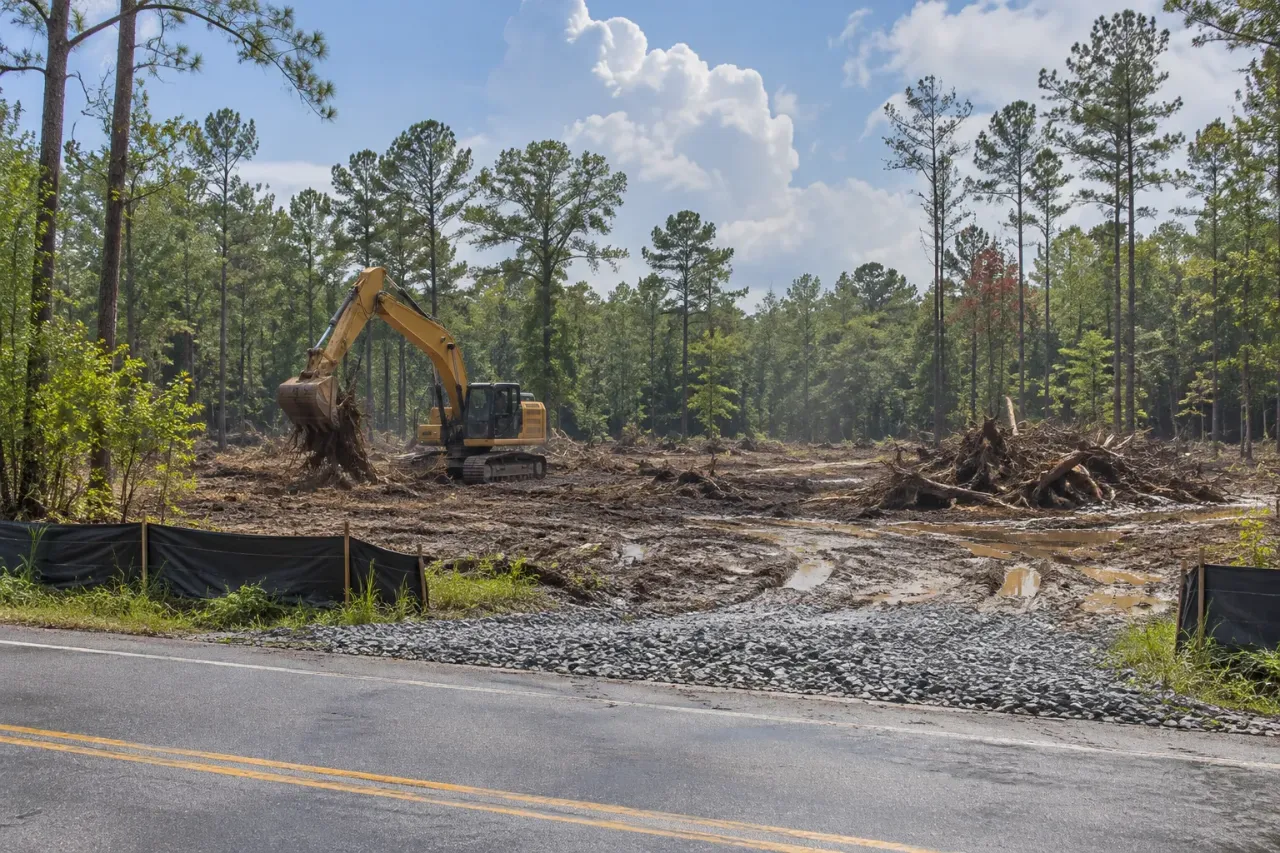
The order of operations
- Septic site first, if the lot isn't on public sewer. The city's plan says sewer mainly serves the growth areas and most rural land relies on wells and septic. Permits come from the Virginia Department of Health's Western Tidewater Health District (Suffolk office, 757-514-4700). On Suffolk's wetter soils, the evaluation often decides where the house can go.
- Check the water. Find out whether any of the lot is in the Chesapeake Bay Preservation Area and where the 100-foot RPA buffer falls if you're near tidal water, marsh, or a stream that runs year-round. New houses go outside the buffer. Planning, 757-514-4060.
- Paperwork. The erosion plan or single-family agreement, the land disturbance permit, and a named Responsible Land Disturber. Inside the Preservation Area, a grading permit is required before any clearing for the development.
- Layout. House, drive, well, drainfield, and (inside the Preservation Area) a reserve drainfield as large as the primary are staked; keeper trees and lines are flagged.
- Erosion controls go in before the clearing. The city's permit says work "shall not commence until the sediment controls are in place."
- Clearing and grubbing. Trees are cut, and stumps and roots come out of the footprint and the drive.
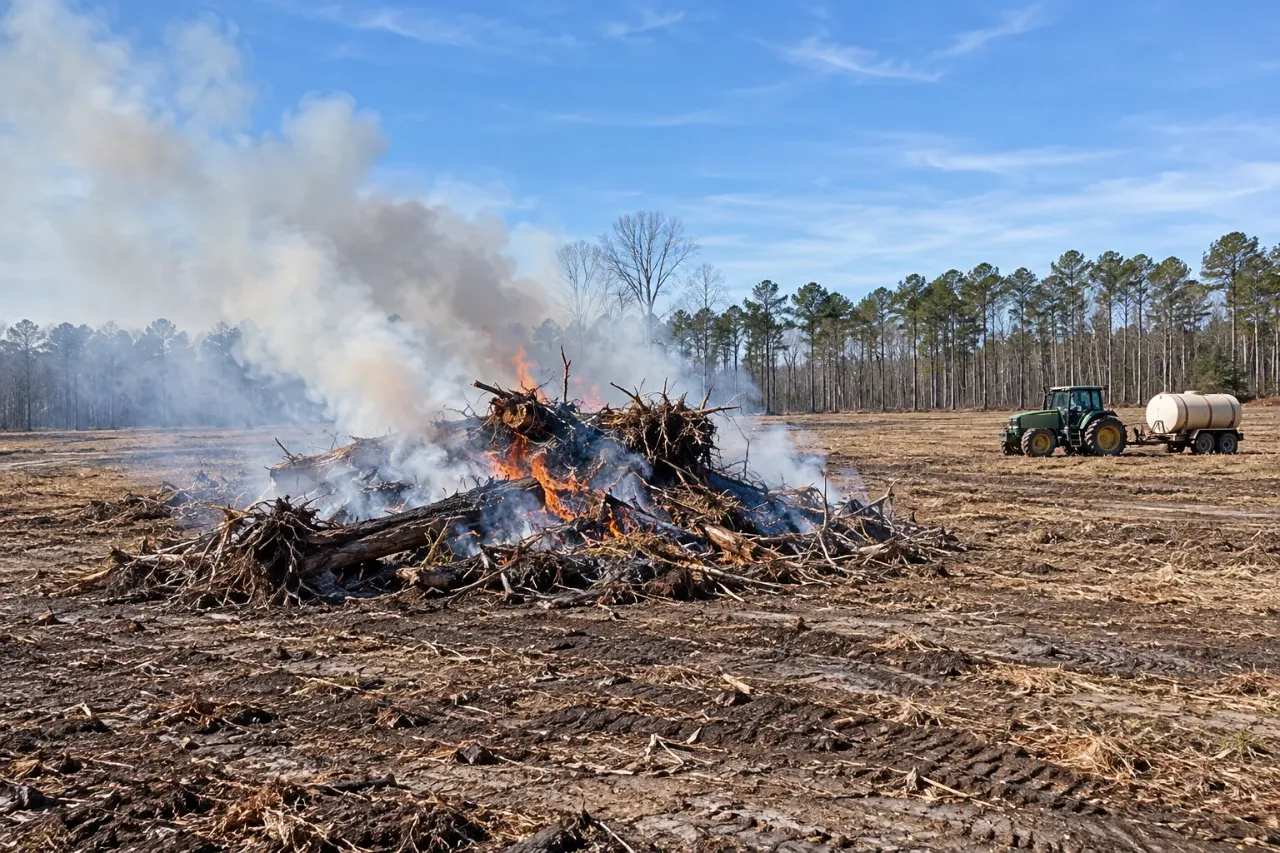
- Debris. Mulched, ground, hauled, or, October through April, burned with a Fire Marshal permit.
- Rough grading and stabilizing. The city's single-family agreement requires bare areas to be stabilized "within seven (7) days of final grading."
Suffolk's 2,500 and 10,000 square foot lines
Under City Code § 35-4, land disturbance of 2,500 square feet or more inside the Chesapeake Bay Preservation Area, or 10,000 square feet or more outside it, needs an erosion and sediment control plan and a land disturbance permit from Public Works. The Bay overlay specifically includes "construction of single-family houses and installation of septic drain fields" in the 2,500 square foot line, so inside the Preservation Area essentially every new house crosses it. Southern Suffolk, outside the Preservation Area, uses 10,000. At an acre or more, the full state stormwater rules apply.
The single-family agreement in lieu of a plan is the simpler path for a house. From the city's single-family packet:
- Silt fence behind the curb line and on every side that slopes away, and between the work and any wetland, trenched in at least 4 inches.
- A construction entrance unless waived, inlet protection, and streets kept free of sediment.
- All bare ground stabilized within seven days of final grading.
- A certified Responsible Land Disturber signs, and Public Works gets 48 hours' notice before work starts.
- A $290 plan review fee for a single-family lot, paid to the Treasurer.
In a subdivision, the lots count together: disturbance under 10,000 square feet on individual lots isn't exempt if the development's total is 10,000 or more. Public Works Engineering: (757) 514-7611. The permits guide has the rest.
Protect the drainfield and its reserve
Virginia's sewage regulations (12VAC5-610-700) call for special caution about wheeled and tracked vehicles crossing the absorption area, because compaction damages the soil the system depends on, and damage can be grounds to reject the site. Inside the Preservation Area, Suffolk also requires a reserve drainfield area at least as large as the primary for new construction, and every septic system there has to be pumped out at least once every five years. On a lot where suitable soil is scarce, the approved drainfield and reserve are worth more than any tree on the property. Stake them, fence them with orange safety fence, and put "no equipment" in writing.
Wet ground and timing
About half of Suffolk is mapped as poorly drained, and much of it is wettest from winter into spring. Grubbing stumps from saturated ground turns a lot into mud, delays the build, and adds ruts to fix. Many owners plan clearing for a drier stretch, which in Suffolk often means summer and fall, exactly when burning is banned. So budget for the debris to be mulched, ground, or hauled. Clearing wet or low ground goes into the details.
What to do with the debris
- Mulch or grind on site. Works year-round and leaves usable mulch. The practical default from May through September.
- Burn. Only October through April, with a Fire Marshal permit, piles approved by the fire official, at least 500 feet from any occupied building unless the occupants agree, attended at all times. On a house lot with neighbors close by, the setback alone often rules it out.
- Haul. The cleanest and most expensive. Stumps and root balls are heavy and bulky.
- Bury. Sometimes done in a pit, but never under anything you'll build on or drive over; the wood rots and the ground sinks.
What lot clearing costs
Angi's September 2026 data puts lightly wooded clearing at $500 to $2,000 per acre and dense woods at $3,600 to $5,600, with an average project around $3,780. HomeGuide's late-2025 figures run $1,200 to $2,500 for light growth up to $4,500 to $8,000 for heavy timber. On Suffolk lots, wet ground, debris handling outside burn season, and the erosion controls the city requires are what push a job up. These are national figures, not Suffolk quotes; the written quote from a contractor who has walked your lot is what counts. The cost guide explains how to compare quotes.
What commonly goes wrong
- Clearing before the septic evaluation, then finding the only workable drainfield spot is where the equipment ran.
- Cutting into the RPA buffer. Removing trees, shrubs, or groundcover there needs Planning approval and replanting.
- Starting before the controls are in. The city's permit says no work until sediment controls are in place, and Public Works wants 48 hours' notice.
- Grubbing in the wet season and leaving a rutted, unbuildable mess.
- Planning to burn in July. Not in Suffolk.
- Stump holes filled with stumps. Buried wood rots and the slab or drive settles. Fill with compacted soil.
- Bare ground left too long. The agreement requires stabilization within seven days of final grading.
- No 811 call. Grubbing is excavation. Virginia 811 locates are free and take up to three working days.
House site questions
Should I clear before or after I close on the lot?
After, in almost every case, and after the septic evaluation. Clearing land you don't own yet, before you know where the drainfield goes, is how people pay to clear the wrong part of a lot.
How much of the lot should I clear?
The footprint, the drive, room to work around the house, and the utility and septic routes. Inside the Preservation Area the ordinance says no more land should be disturbed "than is necessary" and clearing limits follow the construction footprint. You can always clear more later.
Can I keep the big trees near the house?
Often, if they're healthy and the grading leaves their roots alone. Equipment working inside a tree's drip line can kill it slowly. Flag keepers and agree how close machines will go.
Who handles the permits?
The owner signs the single-family agreement; the builder or clearing contractor usually handles the forms and can serve as the Responsible Land Disturber. Put it in writing.
How we help
Call or send a short request and tell us about the lot. We connect you with one independent contractor who clears and grades house sites in your part of Suffolk. They walk the property and give you a written quote, and you decide. There's no charge for the referral.
Want a local contractor to walk your land?
Call or send a short request. There's no charge for the referral.